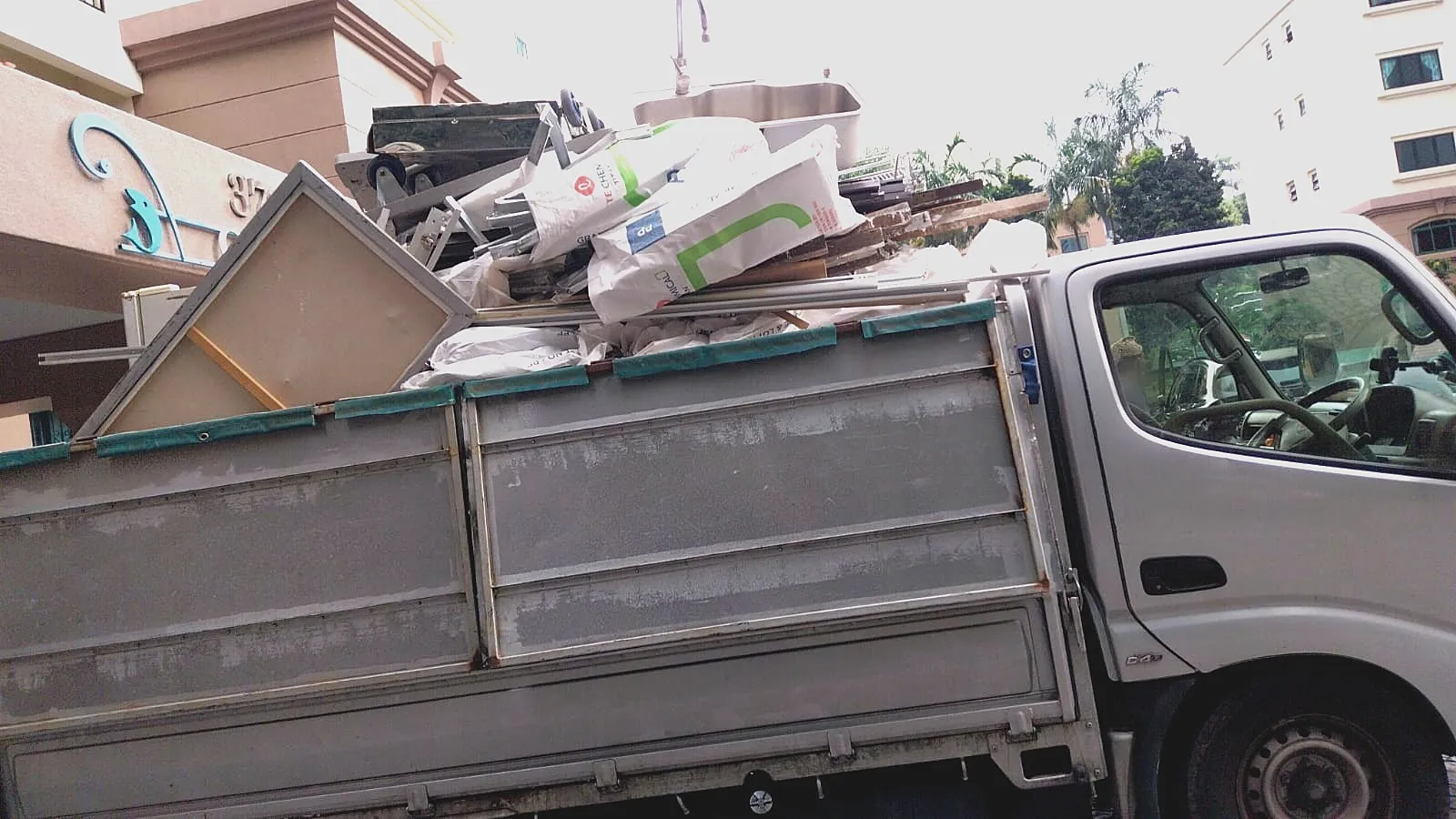
Office reinstatement
Finished before your lease ends
Typical lead time: [TODO: typical reinstatement duration, e.g. 2–3 weeks — confirm with client]
The obligation
What the landlord is asking for
A reinstatement clause asks for the unit as it was handed to you: partitions, ceilings, flooring and alterations out, and the surfaces behind them made good. The drawing beside this is the sequence every unit goes through.
Process
How it works
-
Site survey
We visit the unit, read your tenancy agreement’s reinstatement clause and photograph the current condition.
-
Fixed quotation
You receive an itemised quote against the landlord’s requirements, with no provisional sums hidden in the total.
-
Permits and protection
Building management submissions, hoarding, lift protection and approved working hours are arranged before work starts.
-
Strip out
Partitions, ceilings, flooring, electrical and plumbing alterations are removed and disposed of.
-
Making good
Walls, floors and ceilings are patched and finished back to the original handover specification.
-
Joint inspection
We attend the handover inspection with you and rectify any items the landlord raises.
On site
Three stages of one strip-out
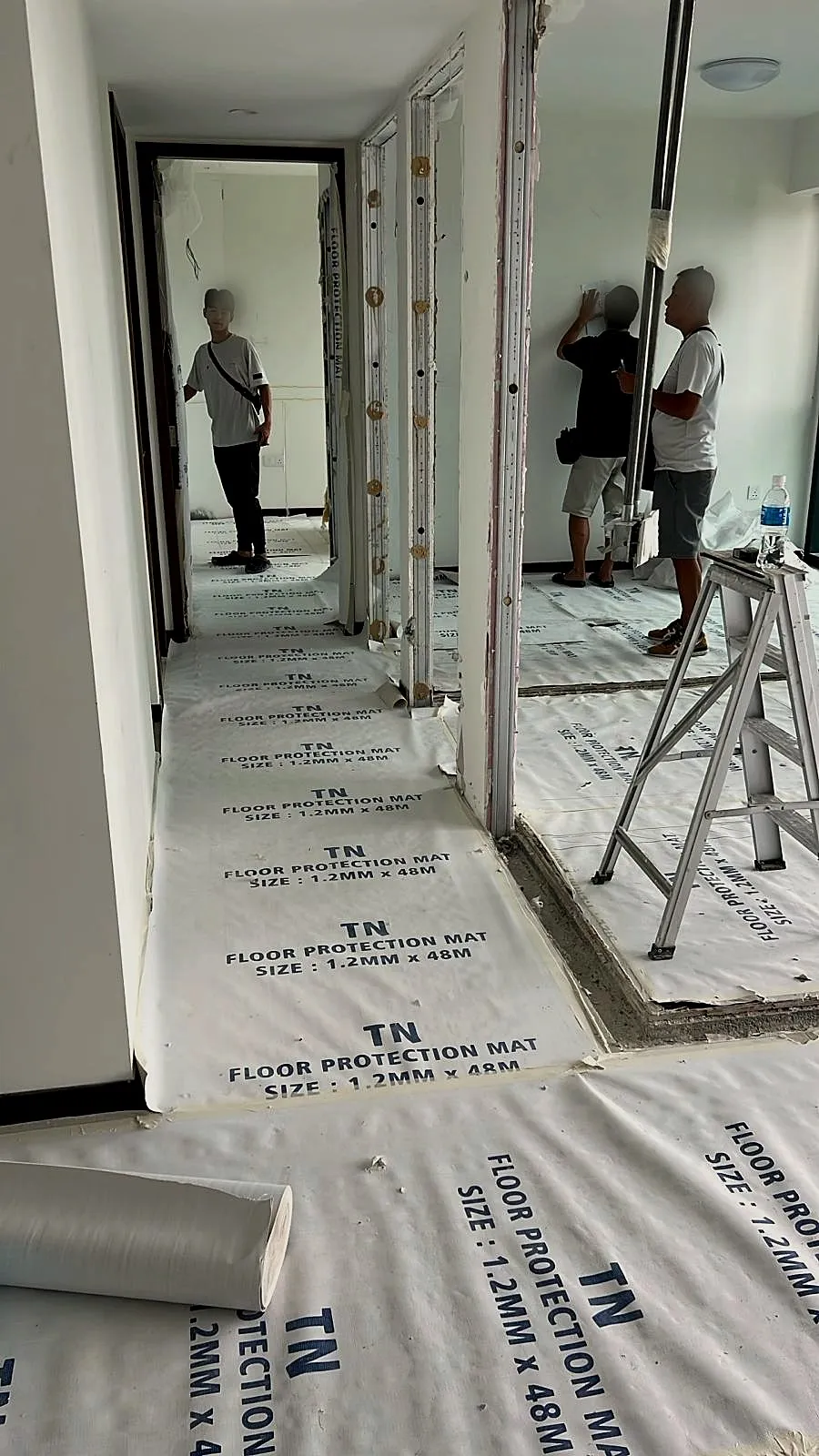
Matting goes down over every floor the works touch, before anything is taken out.
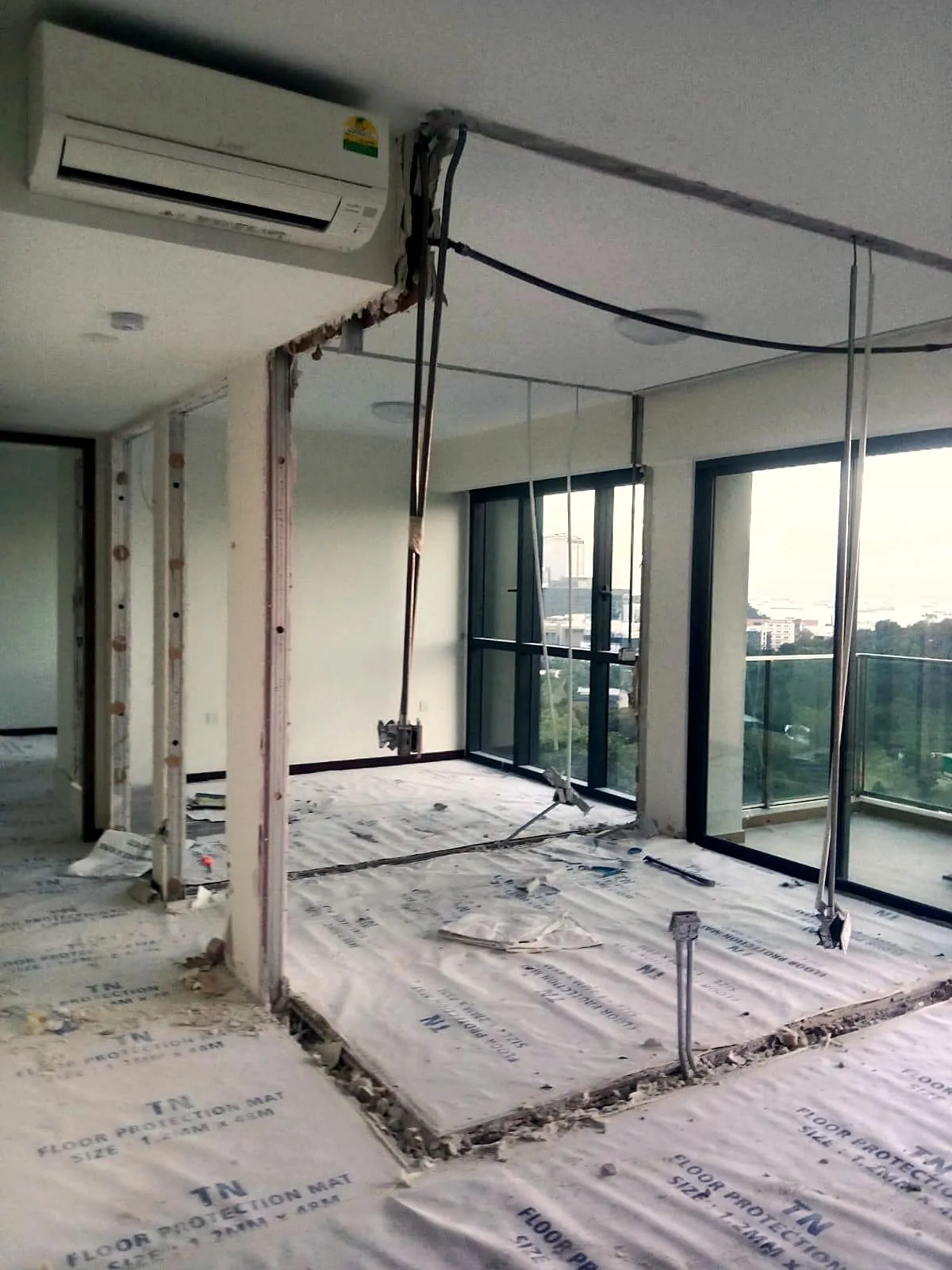
A partition removed to slab level, propped while the span above is taken out.
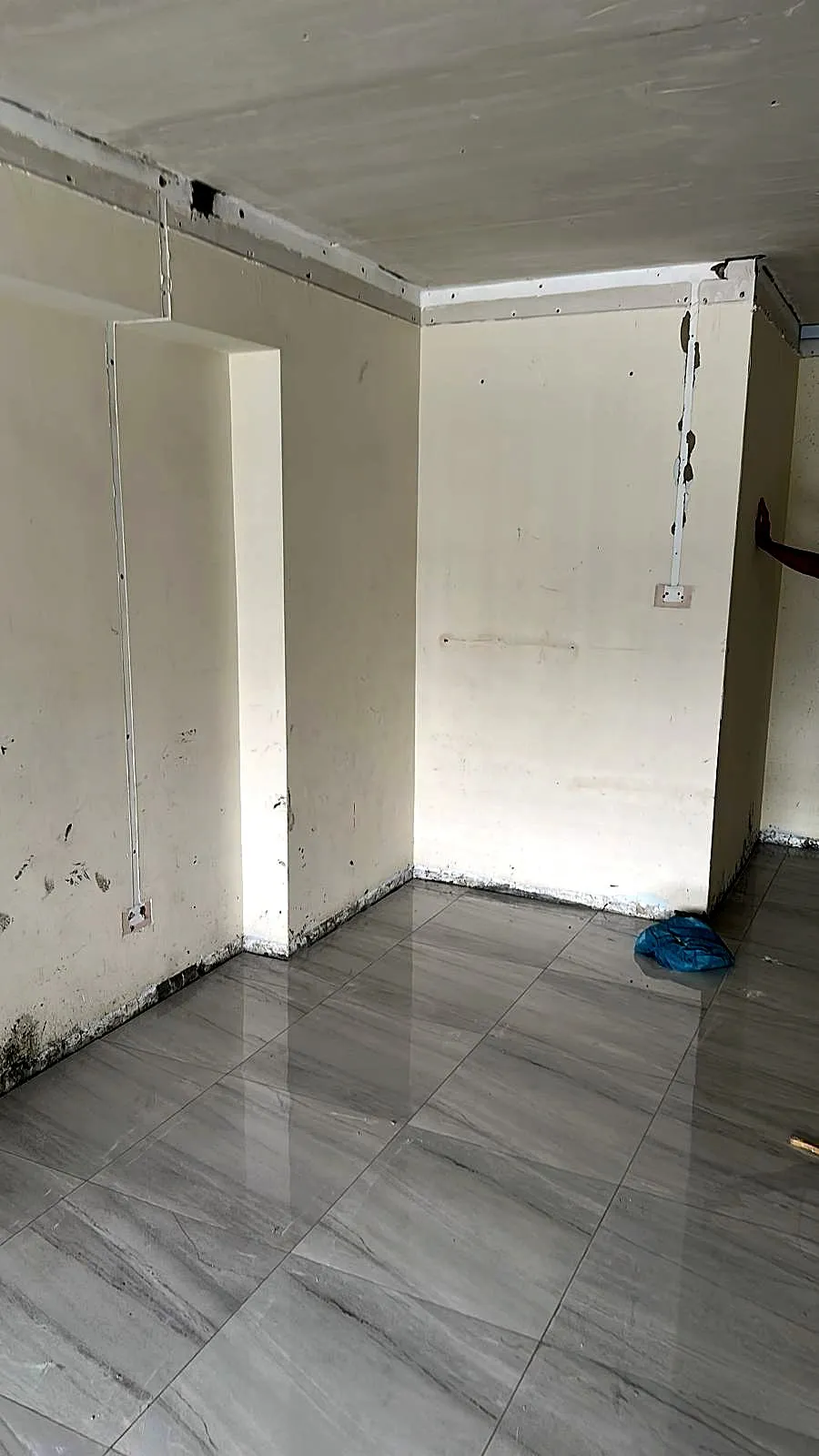
Back to bare walls and original surface conduit, ready for the joint inspection.
[TODO: a matched before/after pair from one unit — the same room fitted out and then stripped, shot from the same spot. The three photos above are from different jobs and are captioned as such; a true pair would be stronger here.]
Scope
What reinstatement usually covers
Commonly removed
- Partitions, glazed screens and stud walls
- Suspended ceilings, bulkheads and cornices
- Carpet, vinyl, raised flooring and tiling you laid
- Signage, logos, feature walls and branding
- Loose and built-in carpentry, pantries and counters
- Added lighting, power points and data trunking
- Aircon added or relocated during your fit-out
Commonly made good
- Walls skimmed, patched and repainted
- Slab and screed made level where flooring came up
- Ceiling grid and tiles back to the base building layout
- Electrical circuits capped off at the distribution board
- Sprinkler and detector positions back to the base layout
- Base building doors, frames and ironmongery reinstated
- Unit swept, cleaned and cleared of debris
Before you quote
Six things that decide the price
-
The reinstatement clause in your tenancy agreement
The clause itself, not a summary of it. It is the document the obligation comes from.
-
The landlord's make-good checklist
If the landlord or managing agent has issued one, it is the scope. If they have not, ask for it early.
-
Your fit-out drawings, or the original handover condition
Whatever shows what the unit looked like before you changed it. Old photographs will do.
-
A floor plan and the floor area
Even a rough plan with dimensions moves a quotation from an estimate to a price.
-
Your lease expiry date
The programme is built backwards from it, including the inspection and any rectification.
-
The building's working hours and permit rules
Whether the works can run in the day, or only at night, changes both the programme and the price.
Questions
Reinstatement questions we are asked
What is reinstatement?
Returning a leased unit to the condition it was handed to you in. Partitions, ceilings, flooring, signage and any alterations you made come out, and the surfaces behind them are made good, so the landlord receives the space as the tenancy agreement describes it. It is a contractual obligation at the end of a lease, not an optional tidy-up.
Who decides what has to be reinstated?
Your tenancy agreement does, and in most cases the landlord or their managing agent issues a make-good checklist on top of it. That document is the scope. We quote line by line against it rather than against a general idea of the works, because anything outside it is a variation you would be paying for twice.
What does reinstatement cost?
There is no honest flat rate, because the price follows the checklist. Floor area, how much partitioning and ceiling has to come down, how far the M&E alterations went, whether the building restricts you to after-hours working, and how much debris leaves the site all move the figure substantially. We survey the unit, price it against your landlord's checklist, and give you an itemised quotation rather than a lump sum you cannot check.
How long does it take?
That depends on the area, how much comes out, and the working hours the building allows — a unit restricted to nights runs to a different programme than one you can work through the day. We set the dates against your lease-end date at quotation stage and work backwards from it, so you know before you commit whether the deadline is achievable.
How early should I start?
Earlier than most tenants think. Building management submissions, the landlord's checklist and the joint inspection all take calendar time that is not construction time, and a reinstatement finished after the lease expires can put you in holding-over rent. Call us as soon as you know you are leaving, even if the date is not fixed.
Do I need permits or building management approval?
Almost always something. Most buildings require a permit-to-work, approved working hours, deposits, and notice for lift and loading-bay use. Where the works are notifiable to the authorities, or where a Qualified Person's involvement is required, we coordinate with the relevant Qualified Persons and authorities as part of the job rather than leaving it with you.
Can you work after hours or at night?
Yes, and in occupied buildings it is often the only way — malls and offices commonly restrict noisy works to nights or weekends. It changes the programme and the price, so we would rather establish the building's rules at the survey than discover them on day one.
Do you remove the debris?
Yes. Disposal is part of the contract, staged so the building's loading bay and bin centre are not blocked, and the unit is cleaned before handover. Debris left behind is one of the most common reasons a handover inspection fails.
Do you attend the handover inspection with the landlord?
Yes. We attend the joint inspection with you, take the landlord's list of outstanding items on the spot, and rectify them. Sending a tenant to face that inspection alone is how small snags turn into a withheld deposit.
What about sprinklers, fire alarms and other fire safety works?
Fire safety works in Singapore are regulated, and plans for them are submitted through a Qualified Person. Where your reinstatement touches sprinklers, detectors or alarms, we coordinate with the relevant Qualified Persons and authorities as part of the works. We do not claim accreditation we do not hold, and it is worth asking any contractor who says they are approved by the fire authority exactly which scheme they mean and for what scope.
Do I need separate contractors for demolition, M&E and making good?
Not with us — that is the point of a single contract. Every trade in the strip-out and the making-good runs under one programme and one point of accountability, so nobody is waiting on a trade who answers to somebody else, and you are not the one coordinating them.